This is a true story, told as a story. Every person in it was real, and every date can be checked: each chapter ends with its sources. It has heroes, but it is not a story about heroes alone. Rockets were born as weapons, and people died building them. Crews burned on the launch pad, fell from the sky and suffocated in orbit. The bad moments are here too, because the people who fly today are alive partly because of what was learned from them.
- Chapter 1 · 1903–1945The Dreamers and the Weapon
- Chapter 2 · 1957–1961A Beep from the Sky
- Chapter 3 · 1961–1972The Race to the Moon
- Chapter 4 · 1971–2011Living in Orbit
- Chapter 5 · 1960–2021The Graveyard and the Garden: Mars
- Chapter 6 · 2003–2024New Nations, New Rockets
- Chapter 7 · 2025–2026Back to the Moon
Chapter 1 · 1903–1945
The Dreamers and the Weapon
Kaluga, Russia, 1903. A schoolteacher who lost most of his hearing to scarlet fever as a boy sits at a table covered in figures. He has never built a rocket and never will. He is working out how fast one would have to go to leave the Earth, and how much of it would have to be fuel.
Konstantin Tsiolkovsky published the answer that year in a paper with a dull title, Exploration of Outer Space by Means of Reaction Devices. Inside it was the rocket equation: the speed a rocket can reach depends on how fast its exhaust leaves it and on how much heavier it is full than empty. It explained, before anyone had flown even an aeroplane very far, why rockets would have to be built in stages and why they would mostly be tanks. He also imagined space stations and people living in orbit. "The Earth is the cradle of humanity," he wrote, "but one cannot live in the cradle forever."
In Germany, Hermann Oberth reached many of the same conclusions on his own. His 1923 book Die Rakete zu den Planetenräumen ("The Rocket into Planetary Space") was turned down as a doctoral thesis and published anyway. It inspired a generation of young German amateurs who began launching small rockets from a field outside Berlin.
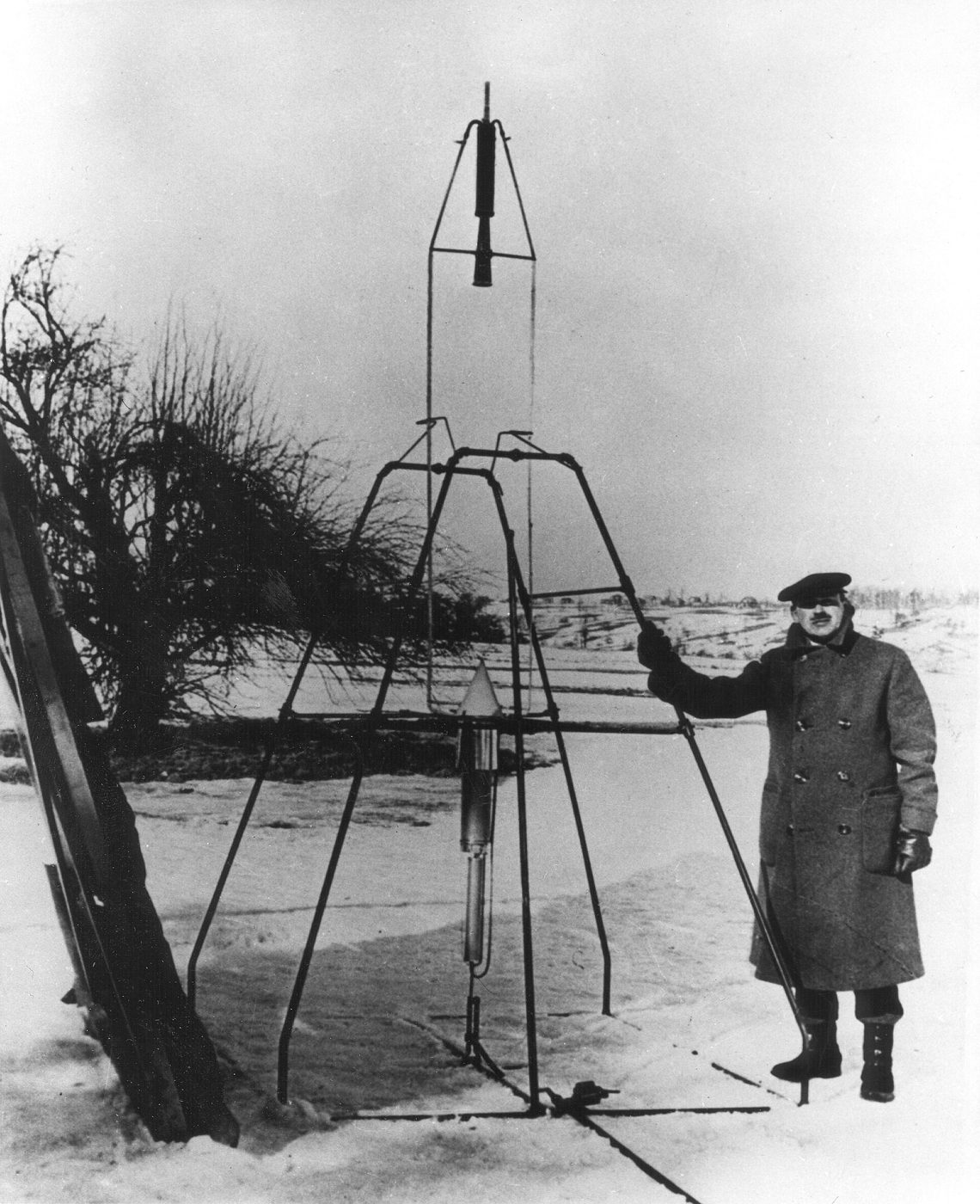
The first person to actually fly a liquid-fuelled rocket was an American physics professor, Robert Goddard. On 16 March 1926, on his aunt Effie's farm in Auburn, Massachusetts, a spindly frame of pipes burning petrol and liquid oxygen rose about 12 metres, flew for two and a half seconds and landed in a cabbage patch 56 metres away. Newspapers had mocked Goddard a few years earlier for claiming a rocket could work in a vacuum. He kept working, mostly alone, mostly in secret.
Then the dream was taken by the military. In the 1930s the German army hired the young amateurs, among them Wernher von Braun, to build a ballistic missile. The result, the A-4, renamed V-2 by Nazi propaganda, was the first human-made object to cross into space, in a test flight in 1944. It was also a weapon of terror. From September 1944, more than 3,000 were fired at London, Antwerp and other cities.
The V-2 killed an estimated 9,000 people where it fell. Even more died building it: around 12,000 forced labourers and concentration-camp prisoners died in the tunnels of the Mittelwerk factory and the Mittelbau-Dora camp, worked to death, starved or executed. The rocket that would one day carry people to the Moon was born in slavery.
When the war ended, the victors divided the spoils. Von Braun and more than a hundred of his engineers surrendered to the Americans and were taken to the United States in a programme called Operation Paperclip, their Nazi pasts largely overlooked. The Soviet Union took the factories, the remaining rockets and the engineers it could find. Both countries now had the seed of a space programme, and a reason to grow it: a rocket that could carry a nuclear bomb across an ocean.
Sources for chapter 1
- Konstantin Tsiolkovsky and the rocket equation, Wikipedia
- Hermann Oberth, Wikipedia
- Dr. Robert H. Goddard, American Rocketry Pioneer, NASA
- Robert H. Goddard, Wikipedia
- V-2 rocket, Wikipedia (deaths in attacks and in production)
- Mittelbau-Dora concentration camp, Wikipedia
- Operation Paperclip, Wikipedia
Chapter 2 · 1957–1961
A Beep from the Sky
4 October 1957. Radio amateurs around the world tune in to 20 megahertz and hear it: beep, beep, beep, steady as a heartbeat, fading in and out every 96 minutes as something passes overhead.
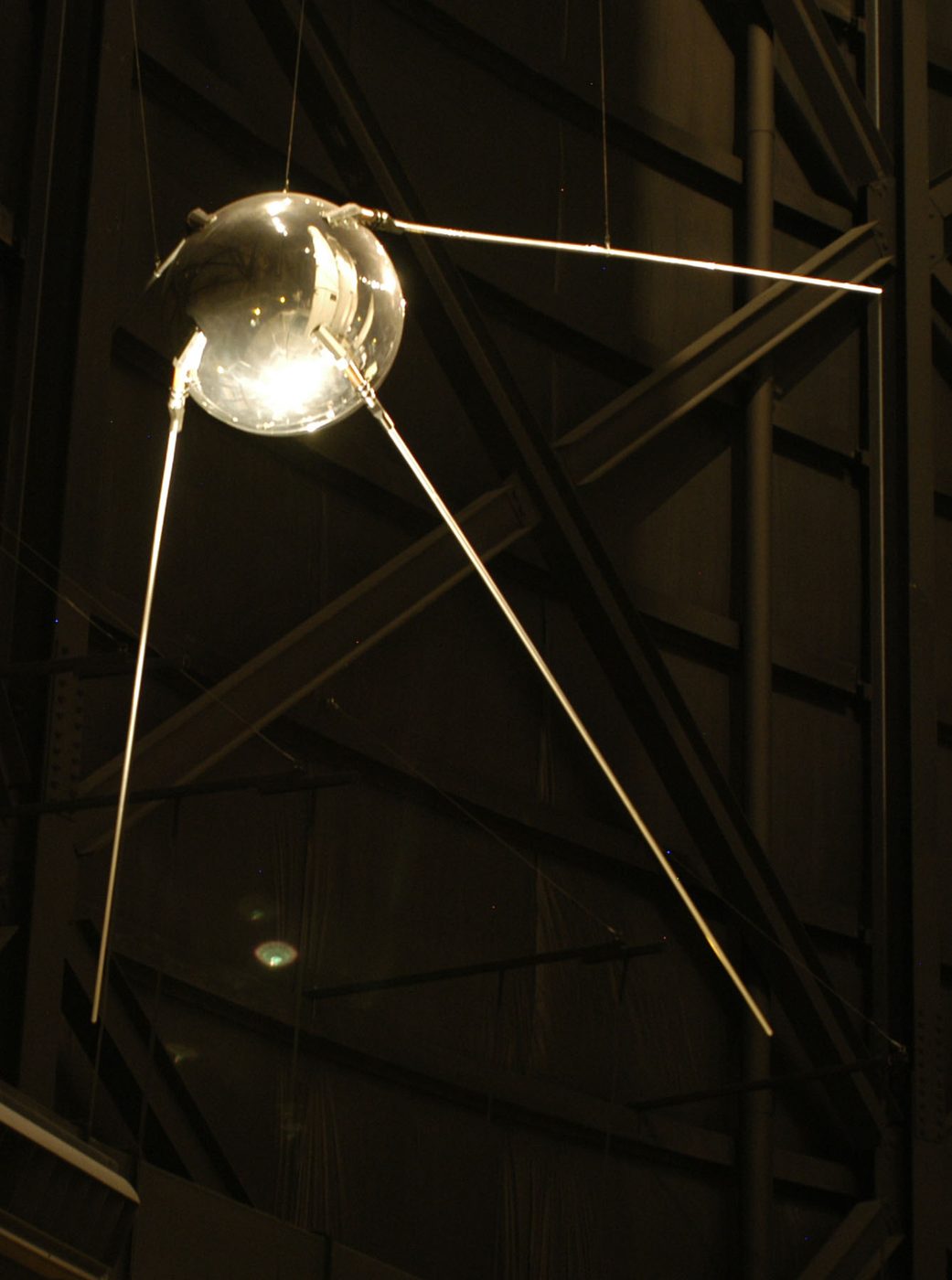
The Soviet Union had launched the first artificial satellite. Sputnik 1 weighed 83.6 kilograms and did almost nothing except announce that it was there. Its batteries ran flat after 21 days, and three months later it fell back and burned up. But its message was heard in every capital: a country that could put a ball in orbit could put a warhead anywhere on Earth. The chief designer behind it, Sergei Korolev, had survived years in Stalin's labour camps. His name was a state secret, and he would remain anonymous for the rest of his life.
A month later, Sputnik 2 carried a passenger: a stray dog from the streets of Moscow named Laika.
There was never a plan to bring Laika back. The Soviet press said she lived for days. In 2002 it was revealed that she died of overheating within hours of launch, when the cabin's cooling failed. She was the first living creature to orbit the Earth, and among the first to die for spaceflight.
The United States answered in public, and failed in public. On 6 December 1957, live on television, the Navy's Vanguard rocket rose about a metre off its pad, sank back and exploded. The newspapers called it "Flopnik" and "Kaputnik". Von Braun's army team was allowed to try instead, and on 31 January 1958 its Explorer 1 reached orbit. Its Geiger counter discovered the radiation belts around the Earth that now carry the name of the scientist who designed it, James Van Allen. That summer the United States founded a civilian space agency, NASA.
At the Baikonur test range, a new R-16 missile was being prepared in a hurry, its tanks full of toxic, self-igniting propellant. Officials and engineers swarmed around it to fix faults. The second-stage engine fired by mistake. The fire killed at least 78 people, among them Marshal Mitrofan Nedelin, commander of the Soviet missile forces; some counts reach over 120. The Soviet Union said Nedelin had died in a plane crash. The truth came out only in 1989.
The youngest of the first Soviet cosmonaut group, 24 years old, was ten days into an endurance test in a sealed chamber full of almost pure oxygen. He dropped an alcohol-soaked swab onto a hot plate. The chamber filled with fire and it took minutes to open the door against the pressure. He died in hospital hours later. His death was kept secret until 1986. NASA did not learn from it, because NASA did not know.
Three weeks after Bondarenko's death, on 12 April 1961, a 27-year-old pilot named Yuri Gagarin was strapped into a ball-shaped capsule called Vostok on top of a converted missile. "Poyekhali!" he said as it lifted off: "Let's go!" He flew once around the Earth in 108 minutes. At the end, as planned, he ejected from the falling capsule at about seven kilometres up and came down by parachute in a field near the Volga, where a farmer's wife and her daughter saw a man in an orange suit walking towards them. The parachute landing was kept quiet for years, because the rules for aviation records said a pilot had to land with his aircraft.
Gagarin became the most famous man on Earth. Twenty-three days later, Alan Shepard became the first American in space with a 15-minute hop that never reached orbit. The United States was behind, and its new president knew it.
Sources for chapter 2
- Sputnik 1, Wikipedia; Sputnik and the Origins of the Space Age, NASA History
- Sergei Korolev, Wikipedia
- Laika, Wikipedia (cause of death revealed in 2002)
- Vanguard TV-3 and Explorer 1, Wikipedia
- Nedelin catastrophe, Wikipedia
- Valentin Bondarenko, Wikipedia
- Vostok 1 and Yuri Gagarin, Wikipedia
- Mercury-Redstone 3 (Alan Shepard), Wikipedia
Chapter 3 · 1961–1972
The Race to the Moon
25 May 1961. John F. Kennedy stands before Congress and asks for something no one knows how to do: to land a man on the Moon and return him safely to the Earth "before this decade is out". The United States has 15 minutes of human spaceflight experience.
For the next few years the Soviet Union kept winning the firsts. Valentina Tereshkova, a textile worker and amateur parachutist, became the first woman in space in June 1963 and spent almost three days in orbit, more time than all American astronauts together had flown until then. In March 1965 Alexei Leonov climbed out of Voskhod 2 for the first spacewalk. His suit swelled so stiff in the vacuum that he could not get back through the hatch; he let air out of it, at the risk of decompression sickness, until he could squeeze inside. The capsule then landed far off course in a snowy forest in the Urals, and the two cosmonauts spent a cold night in it before rescuers on skis reached them.
NASA's Gemini programme learned the skills the Moon would need: long flights, spacewalks, meeting another spacecraft in orbit and docking with it. In March 1966, minutes after the first docking ever, Gemini 8 began spinning out of control, nearly one turn a second, because a thruster was stuck open. Its commander, a quiet test pilot named Neil Armstrong, shut down the main thrusters and used the landing-control jets to stop it, then brought the capsule home early. People remembered how calm he had been.
Gus Grissom, Ed White and Roger Chaffee were sitting in their Apollo capsule on the launch pad for a rehearsal. The cabin was filled with pure oxygen at more than atmospheric pressure and lined with flammable materials; there was a long list of wiring faults. A spark started a fire that filled the capsule in seconds. The hatch opened inwards and could not be pushed open against the pressure. All three died. The capsule was redesigned with a hatch that opened outwards in seconds, fireproof materials and a nitrogen-oxygen mix on the pad. Flight director Gene Kranz told his team afterwards that from then on they would be "tough and competent".
Three months later the Soviet Union launched its new Soyuz spacecraft before it was ready, under political pressure. Vladimir Komarov's solar panel failed to open and the craft was hard to control. He brought it down after a day, but the main parachute did not come out of its container and the reserve tangled with the drogue. The capsule hit the steppe at about 140 km/h. Komarov was the first person to die during a space flight.
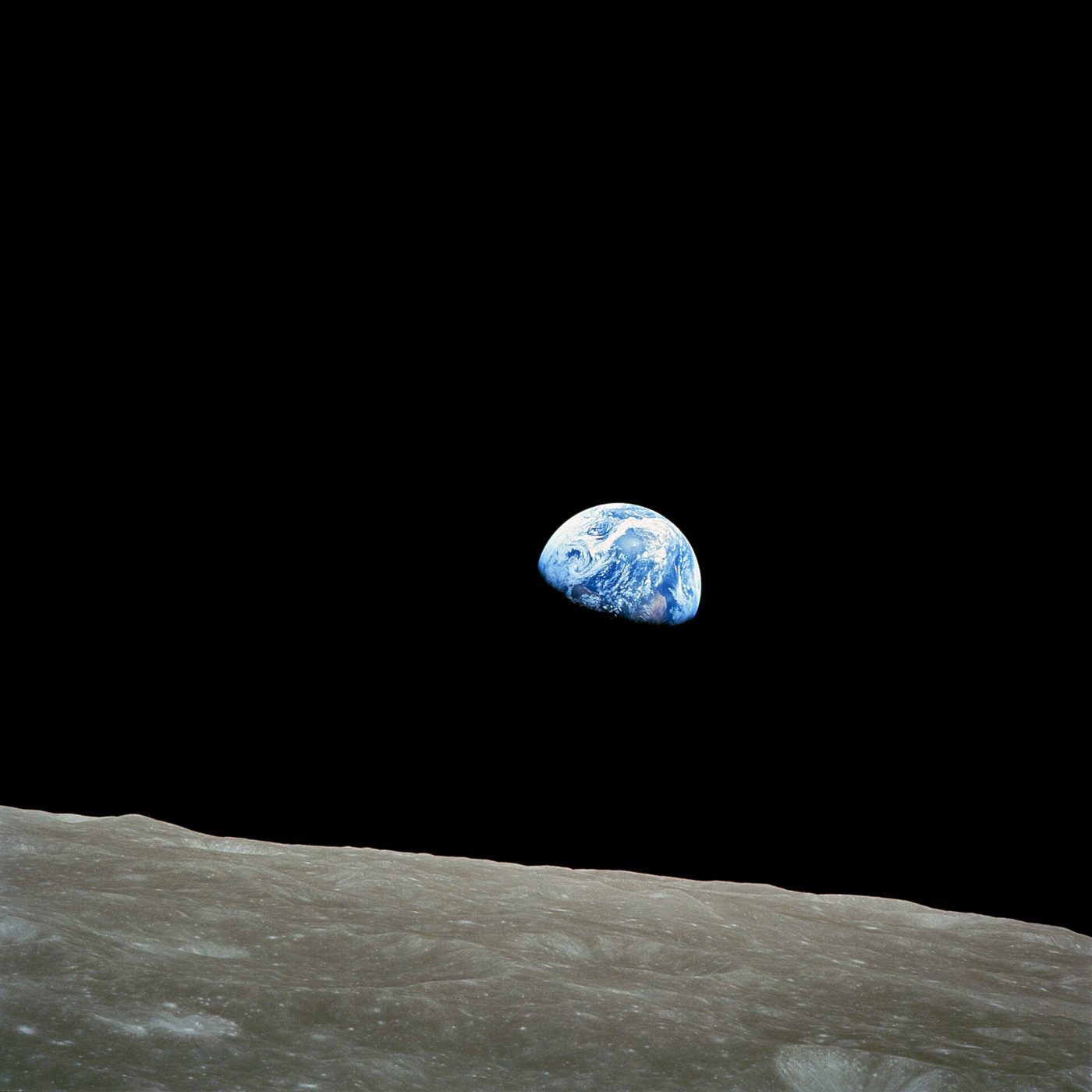
At Christmas 1968, Apollo 8 carried Frank Borman, Jim Lovell and Bill Anders to the Moon and around it ten times. On Christmas Eve, as their spacecraft came round from the far side, Anders saw the Earth rising over the grey horizon and grabbed a camera. His photograph, Earthrise, at the top of this page, became one of the most famous pictures ever taken.
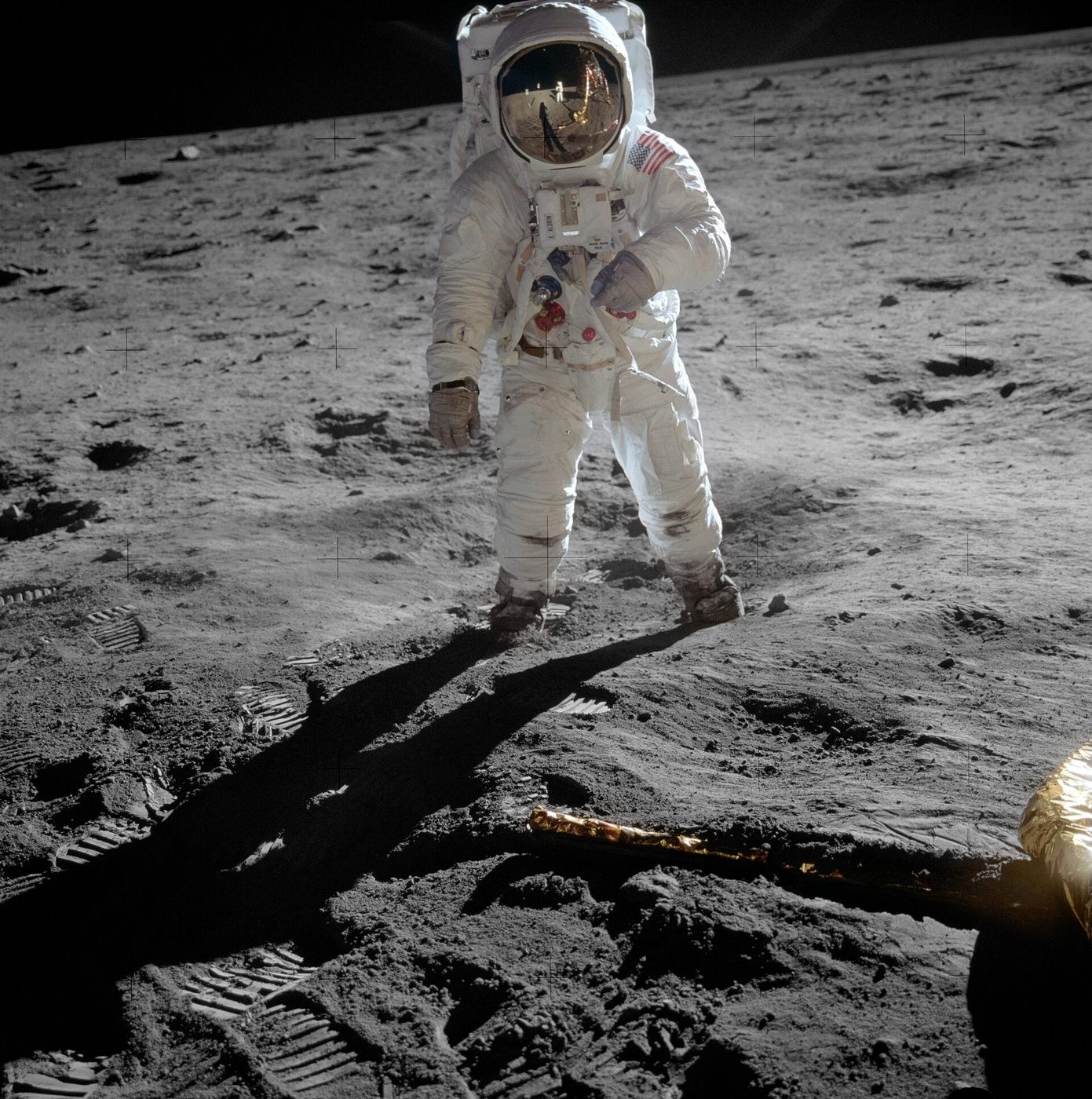
Seven months later, on 20 July 1969, the lunar module Eagle came down towards the Sea of Tranquillity with Armstrong and Buzz Aldrin aboard. The guidance computer kept flashing "1202" and "1201" alarms: it was overloaded. A 26-year-old engineer in Houston, Steve Bales, judged it could keep going. The landing site the computer had picked turned out to be full of boulders, so Armstrong took over and flew on, looking for a clear spot, while the fuel ran low. When Eagle touched down, the fuel warning had been on for about a minute. "Houston, Tranquility Base here. The Eagle has landed." Hundreds of millions of people watched the first steps on television.
Behind the curtain, the Soviet Moon programme was falling apart. Korolev had died after surgery in 1966. His giant N1 rocket failed on all four launch attempts. The second, in July 1969, fell back onto its own pad and exploded, one of the largest non-nuclear explosions in history. The Soviet Union later said it had never been racing to land people on the Moon at all.
In April 1970, an oxygen tank exploded in the service module of Apollo 13, two days out from Earth. "Houston, we've had a problem." With the command module dying, Jim Lovell, Jack Swigert and Fred Haise crowded into their lunar module and used it as a lifeboat, swinging around the Moon to come home. Engineers on the ground worked out how to fit a square air filter into a round hole with cardboard, plastic bags and tape. The crew came home cold, dehydrated and alive.
Georgy Dobrovolsky, Vladislav Volkov and Viktor Patsayev had just spent 23 days aboard Salyut 1, the world's first space station. As their Soyuz separated for the trip home, a valve was jolted open and the cabin's air rushed out into space. They were not wearing pressure suits; there was no room for them. When the recovery team opened the hatch on the ground, all three were dead. They are still the only people known to have died in space itself. Cosmonauts have worn pressure suits for launch and return ever since.
Twelve men walked on the Moon. The last, Gene Cernan of Apollo 17, climbed back up the ladder in December 1972. No one has been back since.
Sources for chapter 3
- Address to Joint Session of Congress, 25 May 1961, JFK Presidential Library
- Valentina Tereshkova and Voskhod 2, Wikipedia
- Gemini 8, Wikipedia
- Apollo 1, NASA; Apollo 1, Wikipedia
- Soyuz 1, Wikipedia
- Apollo 8 and Apollo 11, NASA
- Apollo Guidance Computer (the 1201/1202 alarms), Wikipedia
- N1 rocket, Wikipedia
- Apollo 13, NASA
- Soyuz 11, Wikipedia
- Apollo 17, NASA
Chapter 4 · 1971–2011
Living in Orbit
Skylab, May 1973. The station has reached orbit without its sunshield, torn off during launch, and the inside is heating past 50 °C. Eleven days later the first crew arrives with a home-made parasol to push out through an airlock.
After the Moon, the question changed from "how far?" to "how long?". The Soviet Union launched a series of Salyut stations, and the United States turned leftover Moon hardware into Skylab, where three crews stayed up to 84 days. Engines were not the hard part any more. Bodies were. In weightlessness, bones lose minerals, muscles waste away and fluids rise into the head. Crews had to exercise for hours a day. On the longest missions, people grew tired, short-tempered and sometimes simply refused to work: the third Skylab crew famously took an unscheduled day off.
In July 1975, at the height of the Cold War, an American Apollo and a Soviet Soyuz docked in orbit, and Tom Stafford and Alexei Leonov shook hands through the hatch. It was mostly symbolism. Symbolism mattered.
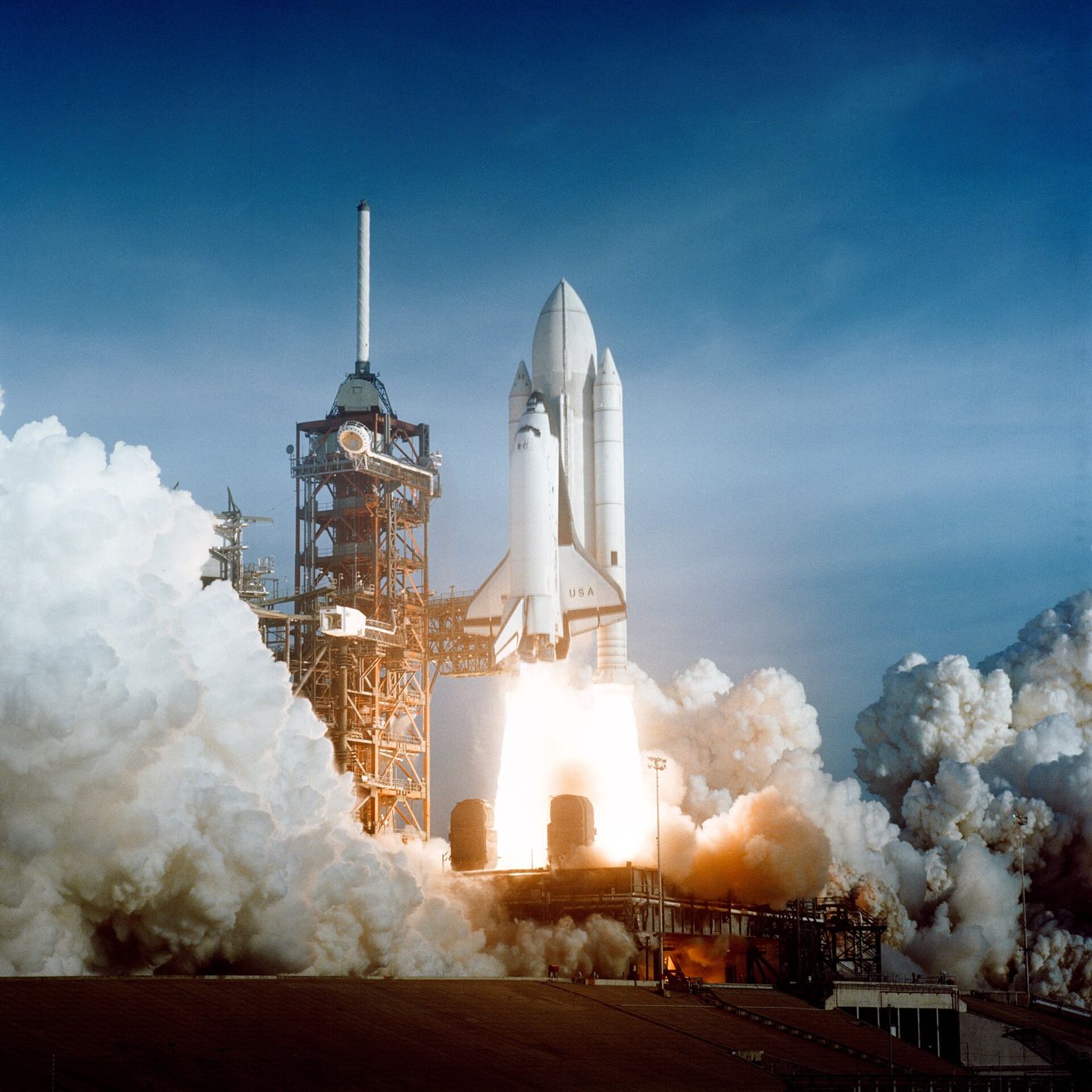
On 12 April 1981, twenty years to the day after Gagarin, the Space Shuttle Columbia flew for the first time. It was a winged spaceplane meant to fly like an airliner, cheaply and every week. It never did. It was brilliant, enormously capable and fragile, and each flight needed months of work.
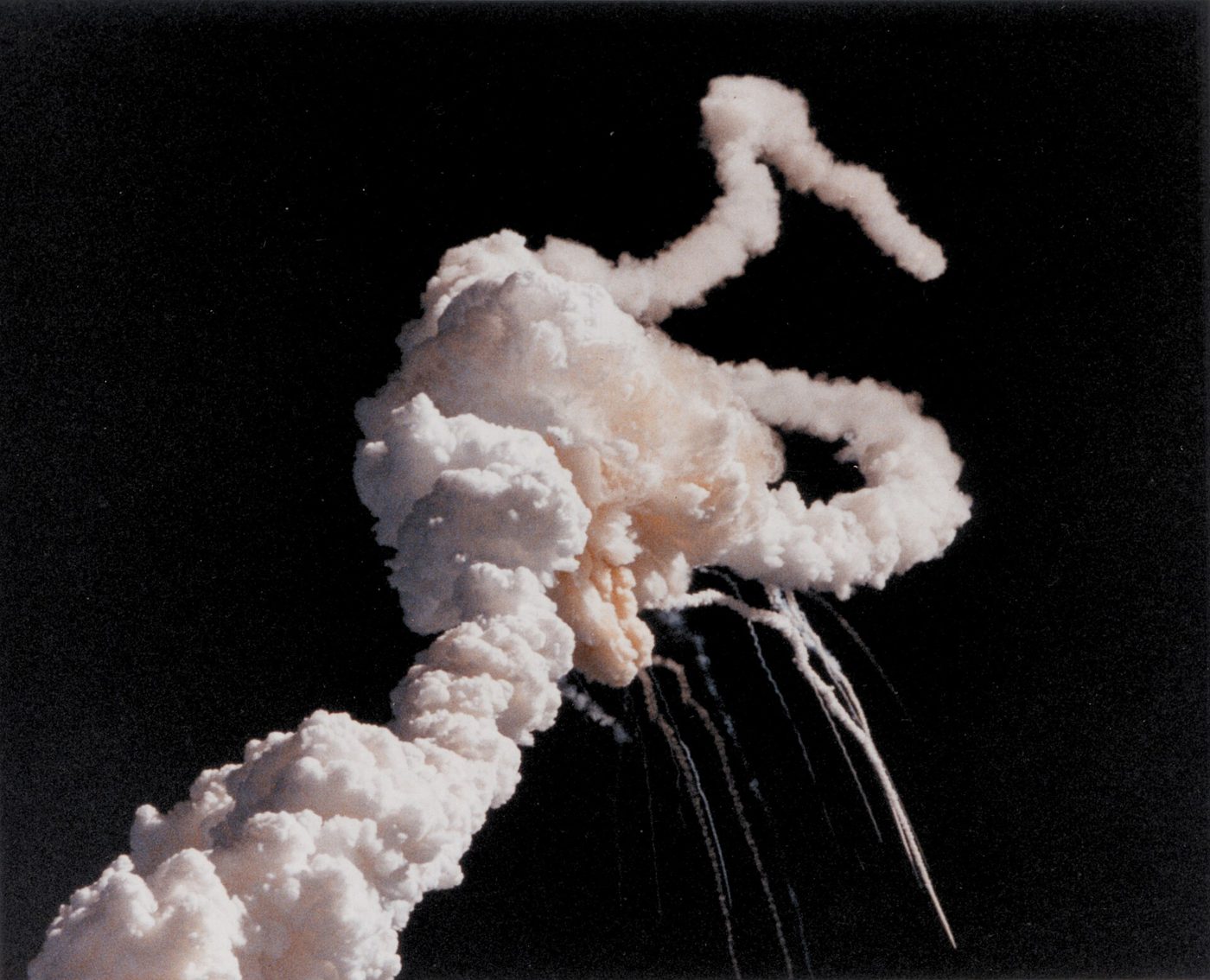
It was the coldest morning ever for a shuttle launch, below freezing in Florida. Engineers at the company that built the booster rockets had warned the night before that the rubber O-rings sealing the booster joints might not seal in the cold. They were overruled. Seventy-three seconds after liftoff, a jet of flame from a leaking joint broke the external tank apart and Challenger was torn to pieces in the air. All seven aboard died: Dick Scobee, Michael Smith, Judith Resnik, Ellison Onizuka, Ronald McNair, Gregory Jarvis and Christa McAuliffe, a schoolteacher whose students were watching. The investigating commission's physicist, Richard Feynman, dipped a piece of O-ring rubber in iced water during a televised hearing to show it went stiff. "For a successful technology," he wrote, "reality must take precedence over public relations, for nature cannot be fooled."
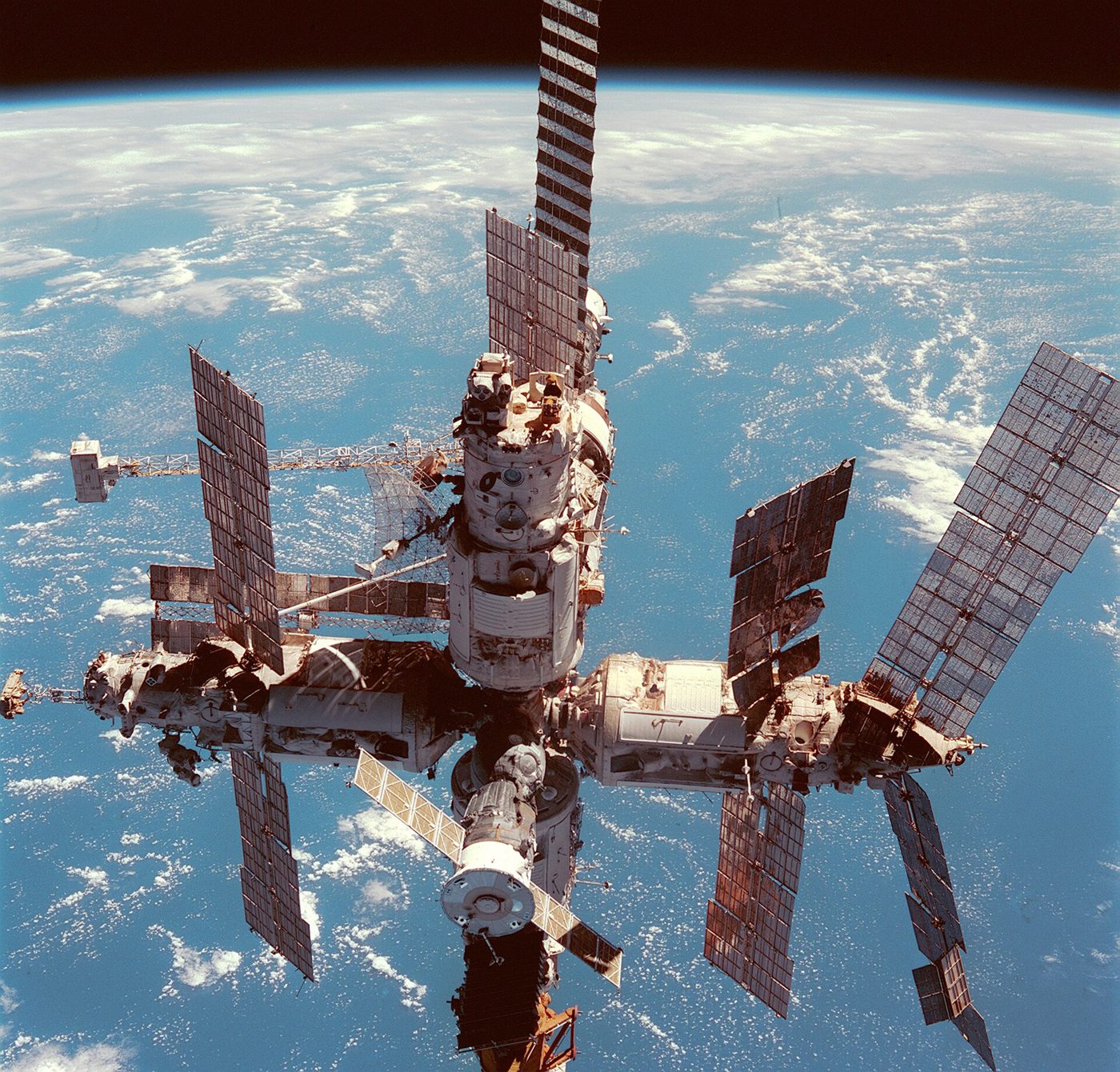
The Soviet Union built Mir, a station assembled from modules over ten years. It held the record for long stays (Valeri Polyakov spent 437 days in a row there in 1994 and 1995) and outlived the country that launched it. In 1997 it went through its worst year: in February an oxygen-generating canister burst into flames and filled the station with smoke; in June an uncrewed cargo ship, being docked by hand as a test, crashed into the Spektr module and holed it. The crew cut the cables running through the hatch and sealed the module off as the air hissed out.
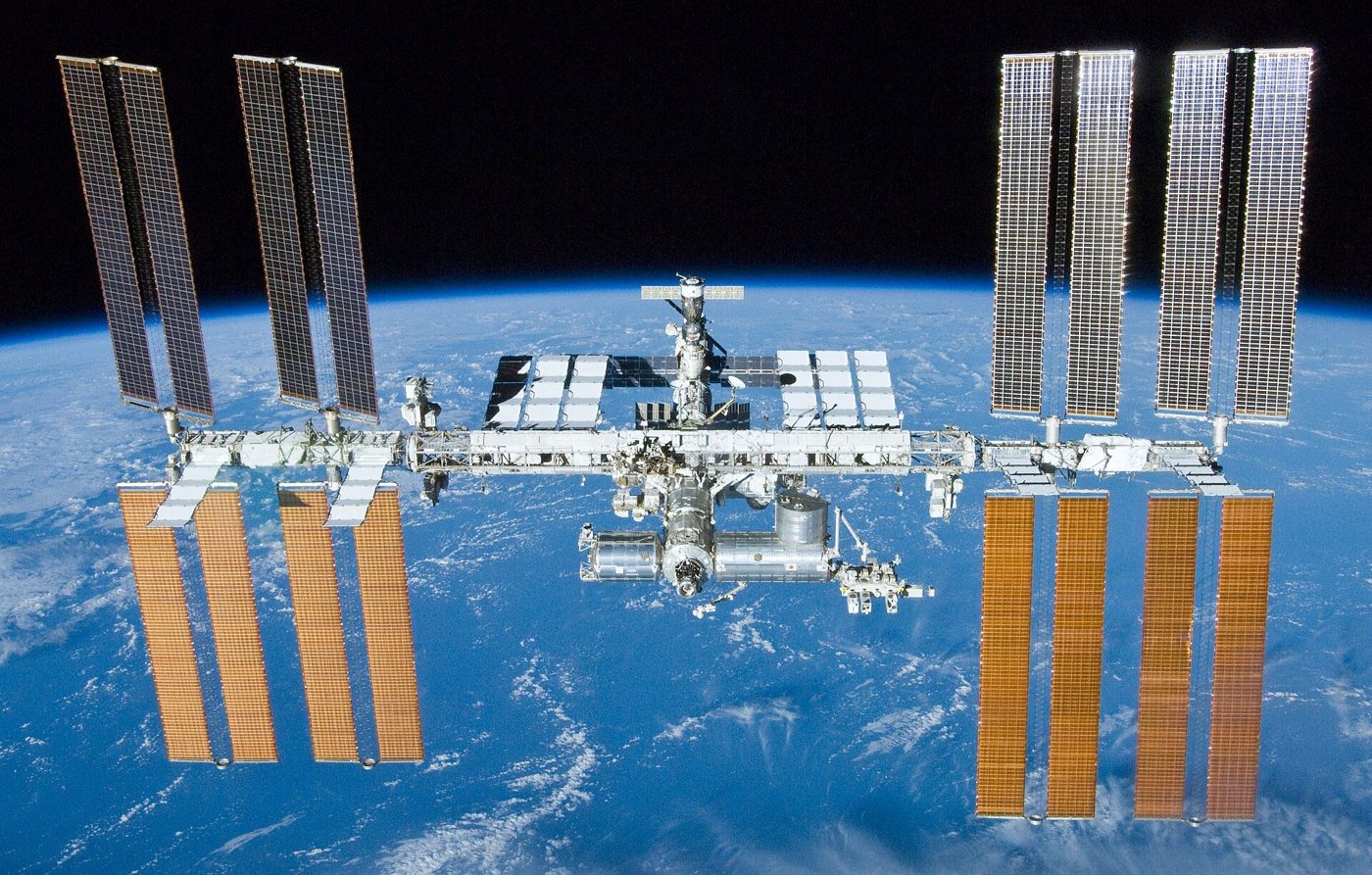
In 1998 the first two modules of the International Space Station were joined in orbit, a Russian one and an American one. Since 2 November 2000 there have always been people living there: more than 25 years without a day when every human was on the ground. Fifteen countries built it, and it is often called the most expensive object ever made.
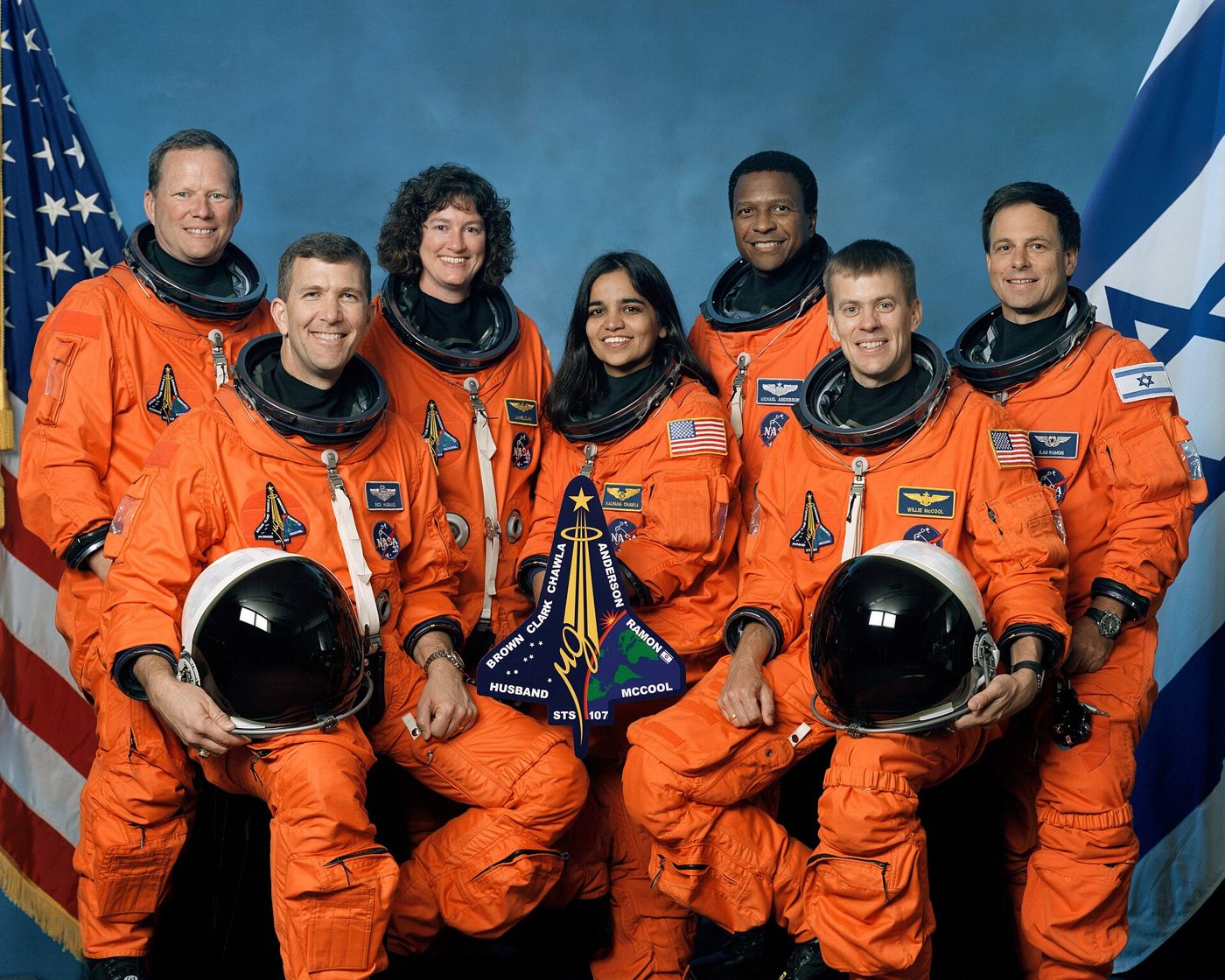
During launch, a piece of insulating foam the size of a briefcase broke off the external tank and struck the front edge of Columbia's left wing. Foam had fallen off on earlier flights; it had become normal. Some engineers asked for pictures of the wing from spy satellites. The requests went nowhere. Sixteen days later, coming home, superheated air got into the wing through the hole, and Columbia broke apart over Texas. Rick Husband, William McCool, Michael Anderson, Kalpana Chawla, David Brown, Laurel Clark and Ilan Ramon, Israel's first astronaut, died. The investigation blamed NASA's culture as much as the foam. The shuttle flew again, but only to finish the station, and it retired in 2011.
Sources for chapter 4
- Skylab and Skylab 4, Wikipedia
- Apollo–Soyuz, Wikipedia
- STS-1, Wikipedia
- Space Shuttle Challenger disaster, Wikipedia; Rogers Commission Report, Wikipedia (Feynman's appendix F)
- Mir and Valeri Polyakov, Wikipedia
- International Space Station, Wikipedia; International Space Station, NASA
- Space Shuttle Columbia disaster, Wikipedia; Columbia Accident Investigation Board, Wikipedia
Chapter 5 · 1960–2021
The Graveyard and the Garden: Mars
2 December 1971. A Soviet lander called Mars 3 settles onto the surface of Mars in the middle of a planet-wide dust storm, the first spacecraft ever to land there softly. It switches on its camera and begins to send a picture. After about twenty seconds the signal stops, and it never comes back.
Mars has always been the hardest place to reach. The first spacecraft sent there, Soviet probes in 1960, did not even leave Earth orbit. Of the dozens of missions launched since, nearly half failed: rockets exploded, probes went silent on the way, landers crashed. Engineers joke about the "Great Galactic Ghoul" that eats Mars spacecraft. The joke has real numbers behind it.

The first close-up pictures were a disappointment. In 1965 the American Mariner 4 flew past and sent back 21 grainy images of craters: no canals, no cities, no plants, an atmosphere a hundred times thinner than Earth's. Mars looked like the Moon. Then, in 1971, Mariner 9 became the first spacecraft to orbit another planet. It waited out the dust storm that had doomed Mars 3, and as the dust settled it revealed giant volcanoes, a canyon system 4,000 kilometres long and dried-up river valleys. Water had once flowed there.
On 20 July 1976, seven years to the day after Apollo 11, Viking 1 landed in Chryse Planitia and sent the first pictures from the surface: an orange, rock-strewn plain under a pinkish sky. Viking 1 and its twin Viking 2 tested the soil for life. One experiment gave a result that looked like life. The others found no organic molecules at all. Most scientists concluded the soil was chemically active but dead. The argument has never quite ended.
In August 1993, three days before arrival, NASA lost contact with Mars Observer, a billion-dollar orbiter, probably because a fuel line ruptured as its tanks were pressurised. In September 1999, Mars Climate Orbiter flew too low into the Martian atmosphere and was destroyed: one team's software gave thruster data in imperial pound-force seconds while the navigation team expected metric newton-seconds. Three months later, Mars Polar Lander went silent during its landing, probably because its engine shut down too early when the legs' vibration was mistaken for touchdown. In 2003 Europe's small Beagle 2 lander vanished on Christmas Day; in 2015 an orbiter finally spotted it on the surface, intact but with its solar panels only partly open, unable to call home.
But Mars rewarded persistence. In July 1997 Mars Pathfinder bounced to a landing inside a cocoon of airbags and released Sojourner, a rover the size of a microwave oven. In January 2004 the twin rovers Spirit and Opportunity landed the same way on opposite sides of the planet. They were designed to last 90 days. Spirit drove for six years until it got stuck in soft sand. Opportunity kept going for almost fifteen years and 45 kilometres, finding rocks that had formed in water, until a planet-wide dust storm in 2018 buried its solar panels in darkness.
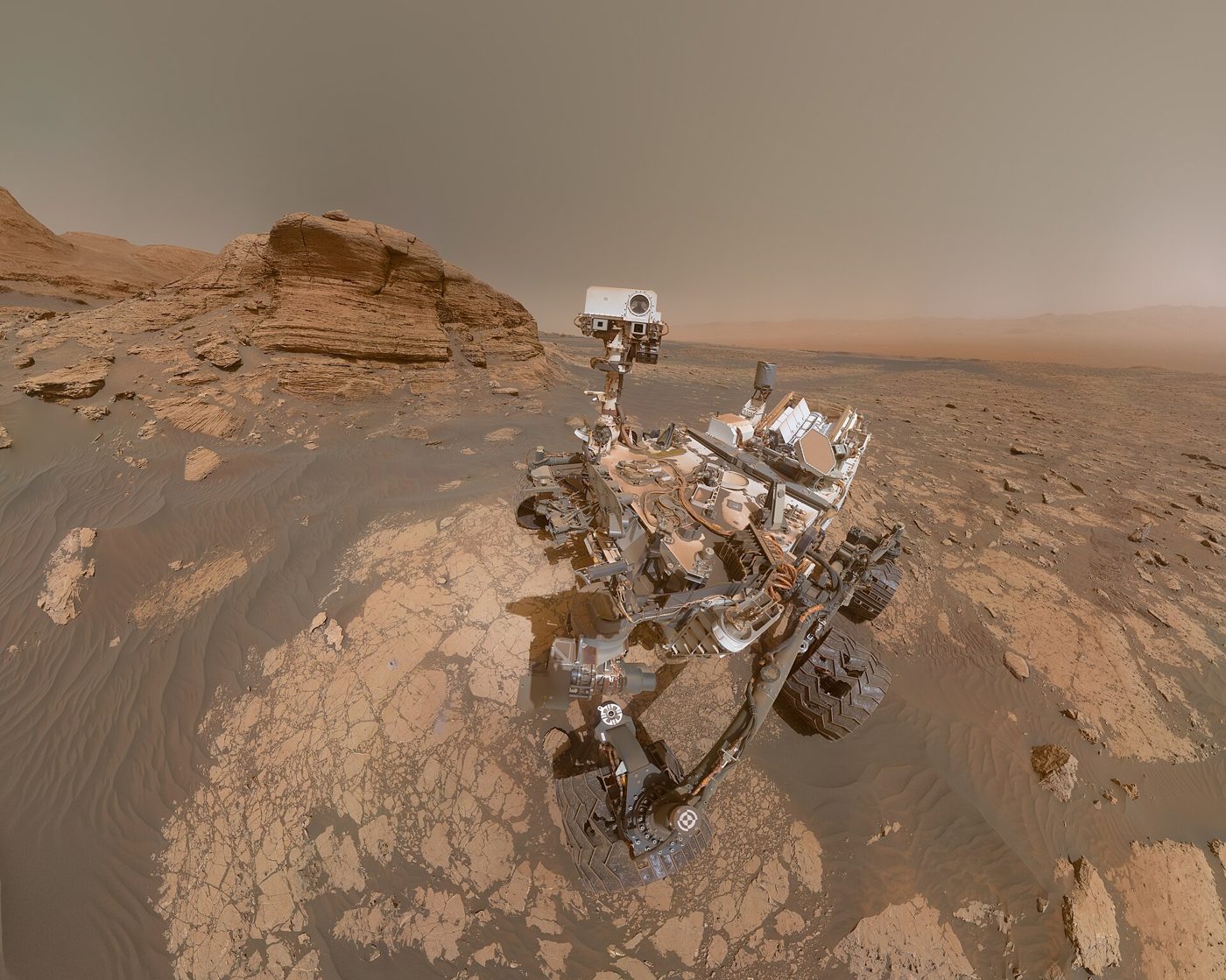
In August 2012 NASA lowered the car-sized Curiosity rover to the floor of Gale Crater on cables hanging from a hovering rocket stage, a "sky crane" that engineers called "seven minutes of terror". Curiosity found that the crater once held a lake with water fit to drink, and the chemical ingredients life needs. In 2014 India's Mangalyaan reached Mars orbit at the first attempt, for less money than many Hollywood films. In February 2021 three missions arrived within ten days of each other: the United Arab Emirates' Hope orbiter, China's Tianwen-1 and NASA's Perseverance rover, which landed in Jezero Crater, an ancient river delta, to collect rock samples for a future trip back to Earth. Perseverance carried a small helicopter, Ingenuity, meant to make five test flights; it made 72. In May 2021 China's Zhurong rover rolled onto the plains of Utopia, making China only the second country to drive on Mars.
Not one human being has been there yet.
Sources for chapter 5
- Mars 3, Wikipedia
- List of missions to Mars, Wikipedia (success and failure record)
- Mariner 4 and Mariner 9, NASA Science
- Viking 1, NASA Science; Viking lander biological experiments, Wikipedia
- Mars Observer, Mars Climate Orbiter, Mars Polar Lander and Beagle 2, Wikipedia
- Mars Pathfinder and Opportunity, NASA Science
- Curiosity and Perseverance, NASA Science
- Ingenuity (helicopter), Wikipedia
- Mars Orbiter Mission (Mangalyaan), Emirates Mars Mission (Hope) and Tianwen-1, Wikipedia
Chapter 6 · 2003–2024
New Nations, New Rockets
Kwajalein Atoll, Pacific Ocean, 28 September 2008. A small company has failed three times to put its first rocket into orbit and has money left for one more try. If this one fails, the company is finished. The rocket is called Falcon 1.
For forty years, only governments flew people into space. In October 2003 China joined the United States and Russia when Yang Liwei orbited the Earth fourteen times aboard Shenzhou 5. China went on to build its own space station, Tiangong, permanently crewed since 2022, and to land robots on the far side of the Moon, which no one had done before, and bring samples back from it. India landed Chandrayaan-3 near the Moon's south pole in August 2023, days after Russia's Luna 25 crashed trying to get there first.
Meanwhile, a group of private companies set out to make spaceflight cheap. The fourth Falcon 1 reached orbit, and SpaceX survived. Seven years later, in December 2015, a Falcon 9 first stage came back after launching its satellites and landed upright on its own engines near the launch site. Reusing rockets, everybody had said, would never pay. Within a few years reused boosters were flying again and again, and SpaceX was launching more than the rest of the world combined. In May 2020 its Crew Dragon carried Bob Behnken and Doug Hurley to the space station, the first time a private company had flown astronauts to orbit.
The new companies also learned by failing. In October 2014 Virgin Galactic's rocket plane SpaceShipTwo broke apart over the Mojave Desert during a test flight, after its tail "feather" was unlocked too early; co-pilot Michael Alsbury was killed and pilot Peter Siebold survived a fall from over 15 kilometres. In September 2016 a Falcon 9 exploded on its pad in Florida during fuelling, two days before a launch, destroying the satellite on top. Starship, SpaceX's giant new rocket, blew up on its first flight in April 2023 and tore a crater in its own launch pad. In June 2024 Boeing's Starliner capsule reached the space station with two astronauts, Butch Wilmore and Suni Williams, but its thrusters misbehaved and NASA judged it too risky to bring them home in it. Starliner came back empty. Their eight-day mission lasted more than nine months.
On 13 October 2024, a Starship booster the height of a 23-storey building came back from its test flight, slowed on its engines over the launch tower in Texas, and was caught in mid-air between two giant mechanical arms. Engineers at the base cheered and screamed. It looked like science fiction. It was meant to make the largest rocket ever built as reusable as an airliner, and one day to send people to Mars.
Sources for chapter 6
- Shenzhou 5 and Tiangong space station, Wikipedia
- Chang'e 4 and Chang'e 6, Wikipedia
- Chandrayaan-3 and Luna 25, Wikipedia
- Falcon 1, Wikipedia
- Falcon 9 Flight 20 (first booster landing), Wikipedia
- Crew Dragon Demo-2, Wikipedia
- VSS Enterprise crash and AMOS-6, Wikipedia
- Starship integrated flight test 1 and Starship flight test 5 (booster catch), Wikipedia
- Boeing Crew Flight Test (Starliner), Wikipedia
Chapter 7 · 2025–2026
Back to the Moon
Kennedy Space Center, 1 April 2026, 6:35 in the evening. On Pad 39B, the same ground Apollo used, a rocket taller than the Statue of Liberty lights up. Four people are on board. For the first time in more than half a century, a crew is leaving for the Moon.

Suni Williams and Butch Wilmore finally came home from the space station in March 2025, aboard a SpaceX Dragon. A year later NASA's Artemis II carried Reid Wiseman, Victor Glover, Christina Koch and the Canadian Jeremy Hansen around the Moon in an Orion capsule. Glover became the first Black astronaut, Koch the first woman and Hansen the first non-American to travel to the Moon. On 6 April they passed the far side and went farther from Earth than any humans before them. The flight was a test: there was no landing. After about nine days Orion splashed down in the Pacific. Its heat shield, which had come back badly eroded from the uncrewed Artemis I flight in 2022, held this time.
Also in 2026, Starship reached orbit for the first time and released real satellites, though one of its engines shut down early and the flight was cut short. The ship-to-ship refuelling that a Starship needs to go to the Moon or Mars has still not been shown. China kept testing the rocket and lander it plans to use to put its own astronauts on the Moon before 2030.
And the race is on again. This time there are more runners, and Mars is in sight. Where it goes next is the subject of the next page.
Sources for chapter 7
- Liftoff! NASA Launches Astronauts on Historic Artemis Moon Mission, NASA, April 2026
- Artemis II blasts off, sending humans back to the Moon, The Planetary Society
- NASA's Artemis II launched on first crewed moon mission of the 21st century, Scientific American
- Artemis II, Wikipedia
- Boeing Crew Flight Test (return of Wilmore and Williams), Wikipedia
- Starship Achieves Orbit for the First Time, SpacePolicyOnline
- SpaceX Starship finally reaches orbit, TechSpot